A compilation of Chinese pork soup recipes using different pork cuts.
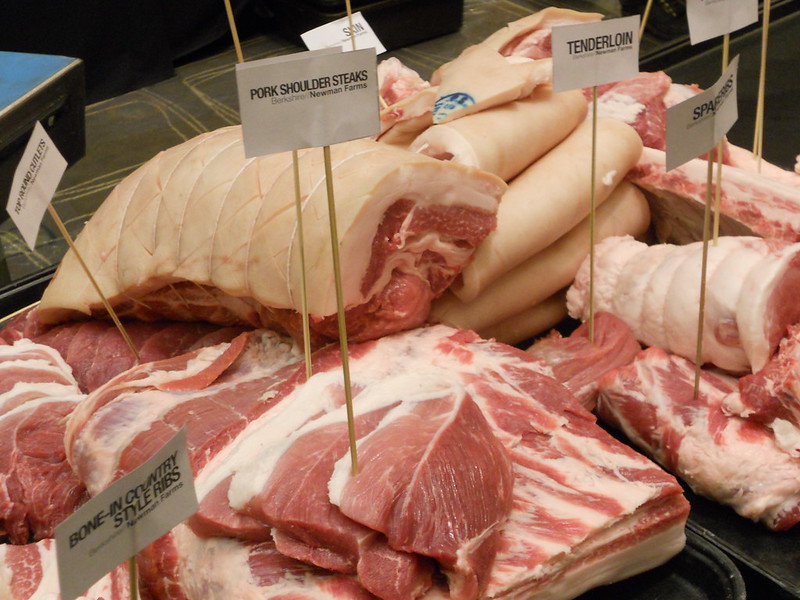
Chinese pork soup isn’t a homogeneous food type. Different pork cuts create totally different soup dishes. Pork ribs and pork bones are used in simmered soups while pork loin, pork liver and ground pork are seen in quick soups and congee. Pork belly, pig skin (yes, pig skin, ears, stomach and intestines), knuckle or shank, and pork trotters are used in stews and braises.
Quick Links to
Let us go through a few of these in more detail.
Ground Pork
Mincing or grounding pork is one of the most common and most versatile way to prepare pork in Chinese cooking. With a little seasoning, it can be used in pork soups, congee, stir-fries, stuffed food and steamed dishes.
It can be cooked as it is or shaped into meatballs or any shape you fancy by using a little cornstarch or egg to combine the ingredients. It can also be mixed with other ingredients to become fillings for wontons, dumplings, pancakes, vegetables and etc.
In theory, any part of the pig can be minced or ground, but premium ground pork uses premium meat cuts. Using “dubious” parts of the pig to make ground pork can affect how the ground pork will feel and taste.
Ground pork used to be made from fresh pork belly or the hind legs which contain more fat. I used to accompany my late paternal grandmother to the wet market where she will choose a nice fresh piece of pork belly and instruct the butcher to ground it up for us. This way, we know exactly which part of the pig our ground pork is made from. We used to own a meat grinder too. It is all metal with a funnel and a spiral cutter. I wonder what happened to it.
A cheaper version is to add pork fat to a cheaper meat cut. The traditional percentage is 30% fat to 70% meat. Health-conscious folks are now choosing 10% or 20% fat.
Getting ground pork from a butcher is safer than buying pre-packed ground pork from the supermarket. Alas! Who has time to go to the wet market at 6.00am in the morning. Just make sure the colour of the pre-packed ground pork is pink and there are no discolouration, brownish liquid or funny smell.
Recipe 1: Pork meatball soup with winter melon and crab meat
This meatball soup is a quick soup. The lemongrass adds a nice fragrant and tangy Southeast Asian flavor. You can add a little cornstarch solution at the end before serving if you like a smoother texture.
Ingredients
- 1 pound lean ground pork
- 1/2 tsp salt
- 1/2 tsp pepper
- 1 tsp cornstarch
- 5 tbsp canola oil
- 4 cup chopped garlic
- 2 litre chicken stock
- 5 tbsp fish sauce
- 2 tsp sugar
- 1 stalk lemongrass (optional) or a tbsp of lemongrass powder (affiliate link)
- 500 grams winter melon
- 6 crab claws or imitation crab meat
- chopped fresh cilantro for garnish
Directions
- Cut the winter melon into bite-sized chunks and remove all the seeds
- Season the ground pork with salt and pepper
- Add the cornstarch and mix well
- Pick a tablespoon-ful of ground pork and roll them into balls with the palms of your hand
- Place the meatballs aside for use later, shred the crab claws or imitation crab meat
- Bring the chicken stock to a boil in a large soup pot
- Reduce heat to a simmer and add the fish sauce, sugar, lemongrass and winter melon pieces
- Cook until the winter melon turns translucent
- Add the meatballs and crab claws
- Simmer for 10-15 minutes until the meat balls float to the surface
- Remove from heat and serve with chopped cilantro as garnish
Recipe 2: Ground pork paste
This meat paste is usually used as stuffings for vegetables like brinjai, bittergourd or topping for tofu. It can also be steamed as a meat loaf.
Ingredients
- 600g ground pork belly
- 110g onion (dice finely)
- Coriander (chopped finely)
- Chinese mushrooms
- Dried flatfish powder (affiliate link)
- 1 egg
- 15g cornstarch
- Seasonings: salt, soy sauce, oyster sauce to taste
Directions
- Place the ground pork belly in a mixing bowl and mix in the seasonings
- Add the diced onion, coriander, chinese mushrooms and grounded dried flatfish
- Add the egg and cornstarch and mixed till the meat paste is slightly sticky
- Shape into balls or use as stuffing
One of my childhood favourites is the steamed minced pork 蒸肉饼 (zheng rou bing). If you want the ingredients and directions written in English, let me know in the comment box.
Freezing ground pork
One of the things that make ground pork popular among Chinese mothers is that it freezes well.
Grandma always have some ground pork stashed in the freezer which makes it very convenient to make meatball soup or ground pork rice porridge on a whim. She buys about 1 kg of fresh ground pork from the market. She then separates them into 5 small portions of about 200g each and freezes each separately using small plastic storage boxes. It can be 4 small portions of 250g each or 2 medium portions of 500g each. Get the idea?
I prefer using cling wrap instead of plastic boxes because I can shape them into thin slabs for easy storing and thawing. I lay the cling wrap on the chopping board, spread the meat thinly on top and fold the cling wrap over. Pat dry and stack them neatly on top of each other in the freezer. Meat bricks ha!
To thaw, just soak the box or cling wrap parcel in warm water until everything softens. I know from personal experience that thin slabs are easier to thaw. Do use up the meat after thawing. Do not re-freeze.
Pork Slices

Any cuts, especially those not near any major bones or cartilage can be sliced across the grain and be used in different ways. The cuts and thickness of the slices may vary and determine what they are suitable for. Thinly sliced pork belly is commonly seen in hot pots. They take so little time to cook. Tender and yummy.
Pork legs and fillets are leaner. To ensure tender juicy pork slices, use the back of the knife, a meat mallet or a rolling pin and pound the meat slices a bit to loosen the muscle fibre. Marinate with seasonings and seal in the juices with a dash of cornstarch or arrowroot.Read more about cornstarch and other types of thickeners.

Try the following 2 simple lean pork soup recipes with only a few ingredients.
Recipe 3: Lean pork soup with watermelon peel
This is a pork soup using watermelon peel, also known as watermelon rind. It is a great treat in summer.
Most people know that watermelon flesh is juicy, sweet, and full of iron and vitamin C. We chomped away at the flesh and throw away the seeds and rind. Few know that the peel is considered to have medicinal properties.
The tart white rind is believed to contain citruline. This is an amino acid that helps dilate blood vessels and improve blood circulation. In traditional Chinese medicine, dried watermelon rind has been prescribed for patients with kidney problems, anaemia, dry throat, chapped lips, and bladder inflammation.
The next time you eat thirst-quenching watermelon, do not throw away the peel. Use it to cook a quick Chinese soup.
Ingredients
- 300g watermelon skin
- 500ml soup stock
- 150g lean pork
Directions
- Remove any red flesh from the watermelon peel
- Peel the outer tougher part of the peel, leaving only the pale green or whitish part
- Cut into bite-sized pieces
- Slice the lean pork thinly and pound each piece lightly with a meat mallet or back of the knife to tenderize them
- Marinate lightly with soy sauce and a little cornstarch
- Bring 500 ml soup stock to a boil
- Add the watermelon peel slices and the lean pork slices
- Cook over high heat for 10 minutes
- Season with a bit of salt
- Serve
Recipe 4: Mango soup with lean pork
A mango recipe with lean pork equals a Chinese summer soup? Bet you didn’t know that mangoes can be used in soups.
Mango is considered a cooling food and has been used to relieve coughing caused by heaty lungs. The flesh of a very ripe mango can also relieve inflammation and scalding. This mango soup is great for a cough caused by the summer heat.
Ingredients
- 4 half-ripe mangoes
- 250g lean pork
- Salt
- 10 cups of water
Directions
- Parboil the lean pork in boiling water for about 5 minutes
- Remove and rinse
- Wash and halve the mangos
- Place the lean pork and mango halves in a pot and add 10 cups of water
- Bring the pot to a boil and lower the heat to a simmer
- Simmer for 2 hours
- Season with salt before serving
Recipe 5: Egg drop soup with button mushrooms and pork
An egg drop soup that is not thickened. Marinating the pork slices with cornstarch is an important step because it imparts a thin smooth coating to the pork.
Ingredients
- 100g pork slices
- 200g button mushrooms
- One quarter section of carrot
- 1 egg
- 1 small stalk parsley
- Cornstarch and salt
- 500ml water
- 1 chicken stock cube
Directions
- Clean the mushrooms and slice thinly
- Peel the carrot and slice thinly
- Marinate the pork slices with some salt and cornstarch
- Bring 500ml water to a boil, add the chicken stock cube and stir to dissolve
- Add the mushroom and carrot slices and cook for about 2 minutes
- Add the pork slices and stir to break up the pieces
- Beat the egg
- When the pork slices turn pale, add the parsley
- Drop the egg into the soup, sprinkle sesame seed oil
- Serve
Recipe 6: Salted vegetable soup with pork slices
A visitor once asked me whether I have a recipe for pork and pickled cabbage soup. She ate it at some downtown chinese restaurants in NYC. My first thought about the pickled cabbage was: the Cantonese (Guang dong) or Szechwan (Si chuan) type?
Pickled cabbage can mean different things to different dialect groups. The Cantonese has a soup dish called 咸菜汤 (harm choy tong) which means salted vegetable soup. The key ingredient is a type of pickled mustard cabbage.
The Szechwan has a soup dish called 榨菜汤 (zha cai tang) which means pressed vegetable soup. The key ingredient is zha cai, also a type of pickled mustard green but the stem of this green vegetable is knobbly and shaped more like a fist.
Both types of pickled vegetables can have salty, sourish or spicy varieties. So, a tough question indeed. Fortunately, the recipe below can be used with both types of pickled vegetables.
Now, the question is which is which at the Asian grocery shops. The Szechwan one is a knobbly fist-shaped vegetable. It offers a more robust taste and is crunchier than its Cantonese counterpart.
Buy pickled Chinese vegetables in large packets if you intend to make soups. Those sold in small jars are usually for cold side dishes and can be served straight out of the jars.
As for the tomato, remove the skin by scoring the skin and blanching it in hot water. The skin will curl back from the flesh making it easier to remove. If you have soft tofu leftovers lying around in the fridge, add them to your soup.
Ingredients
- 300g lean pork
- 300g salted vegetable or pickled mustard green
- 3 stalk of spring onion
- 1 tomato
- 1 litre water or soup stock
- 1 tsp salt
- 1 tsp soy sauce
- 1 tbsp cooking wine
- Dash of sesame seed oil
- Dash of pepper
- 1 tbsp cornstarch
Directions
- Slice the lean pork thinly across the grain
- Marinate the pork with a dash of soy sauce and sesame seed oil
- Add the cornstarch and mix well
- Wash and soak the salted vegetable for about 10 minutes
- Cut the salted vegetable into bite-sized pieces or thin slices for the Szechwan variety
- Wash and cut the tomato into thin quarters
- Bring a pot of water to the boil
- Add the salted vegetable, spring onion, and tomato
- Bring the water back to a boil
- Lower the heat and simmer for about 20 to 30 minutes
- Add the marinated pork
- Season the soup with the salt, cooking wine, and pepper
- Taste the soup before adding salt
Pork ribs

Pork ribs is very popular for simmering pork soups. The ribs imparts a much stronger flavour to the pork soup than just the meat.
Bone marrow contains high levels of protein and iron while the bone itself has calcium. Suitable boiling causes the calcium to “migrate” to the soup.
Pork ribs can be divided into 2 types: prime ribs and spareribs. The price conscious ones (like me) will use spareribs to simmer soup. Prime ribs are more expensive and are used mainly for meat dishes like sweet and sour pork ribs.
Preparation is easy. Just parboil the ribs before using.
Recipe 7: Herbal pork soup with apples and pears
This pork soup recipe features fresh apples and pears. It is a sweet and clear herbal soup with the fresh fruits.
Apricot seeds are kernels of a Mongolian apricot. There are 2 varieties: sweet and bitter. Both are highly regarded as herbs for respiratory problems. They feature frequently in soups for colds as they have been observed to remedy severe colds, asthma, rheumatism, swollen feet and constipation.
Ingredients
- 3 apples
- 3 pears
- 300g spare ribs
- 25g sweet and bitter apricot seeds 南北杏 (nan bei xing)
- 25g red dates
- 2 slices ginger
- 3 litre water
- Salt to taste
Directions
- Wash the apples and pears well
- Slice and core them but do not peel
- Parboil the spare ribs for about 2 minutes
- Remove, drain and rinse
- Place ginger, spare ribs, apples and pears, apricot seeds, red dates and water in a soup pot
- Bring to a boil
- Lower to medium heat and simmer for 1.5 hour
Recipe 8: Brown rice porridge and pork ribs
Pork ribs have considerably less calories than other pork cuts. It is very suitable for making soups that are flavorsome but not oily. When slow cooked, the calcium in the bones seeped into the soup infusing it with a nice smooth and slightly thickened texture. Very nutritious too.
Brown rice is more nutritious than polished white rice but it is harder to cook. Soaking it prior to cooking will shorten cooking time. It is also possible to mix brown rice and white rice.
I would use the slow cooker or a good rice cooker to make this rice porridge.
Ingredients
- 300g pork ribs
- 150g brown rice
- 600ml bone stock
- 1 tbsp goji berries
- 1g astragalus
- Chopped coriander
Seasonings
- Salt and pepper
- Sesame seed oil
Directions
- Wash the brown rice and soak in warm water for 1 hour
- Clean the pork ribs and parboil for 2 minutes
- In a big pot, add the astragalus, brown rice, pork ribs, and stock
- Bring everything to a boil before lowering to a simmer
- When the congee is done, add the goji berries and season with salt and pepper to taste
- Garnish with chopped coriander and drizzle some sesame seed oil before serving
Recipe 9: Pork soup with red dates and Chinese yam
I find this pork soup a very satisfying dish especially for days when I worked very hard. It is very nice to come home to a bowl of piping hot pork soup with Chinese yam, goji berries and red dates.
If you stay on your own, prepare the ingredients in the morning and leave everything to slow cook in a slow cooker before leaving for work. When you come back tired from work, your soup will be waiting for you. Happiness!
Ingredients
- 75g fresh Chinese yam
- 8 red dates, remove the pits
- 1 tbsp goji berries
- 300g pork ribs
- 3 pieces of fresh ginger
- 1 litre water
Seasonings
- Salt
- 1 tbsp mirin
Directions
- Peel the Chinese yam and cut into pieces
- Clean the pork ribs and parboil for 2 minutes
- Place the red dates, pork ribs, ginger and water into a big pot
- Bring everything to a boil
- Lower heat and simmer for 20 minutes
- Add the Chinese yam, goji berries, and seasonings
- Simmer for another 20 minutes
Pork bones
I made a distinction here between pork ribs and pork bones.
Pork bones are usually from the limbs while pork ribs, as the name suggests, are from the rib cage. Limb bones are larger and contain more marrow but less meat. Therefore, they are better for making soup stocks and bone broths.
The spine can also be categorized as bones but I avoid using the spinal bones to make pork soup. There are a lot of spinal matter around that region. Limbs are preferred. It is important to parboil the pork ribs and pork bones before use.
We have come to the end of this list. Did you try any of the recipes or cooking ideas? If yes, how did it turn out? Let me know by leaving me a comment.
Happy cooking!


Leave a comment